An intestine cleanse is one of the best places to start when you want to feel better, because a healthy gut is the foundation for everything else.
 I believe so many of our physical concerns trace back to the same root: the gut. Your intestines are in charge of breaking down and absorbing the nutrition from your food. When your gut is sluggish and backed up, it can not do its job well, and your body misses out on what it needs to function. Over time, always running low, you are more likely to get sick.
This tutorial goes over what is important for gut health and how to heal and nourish it.
My rule of thumb is that if you eat three meals a day, ideally you would have close to that many well formed, easy to pass bowel movements. If this is not you, then now might be a good time to do a cleanse.
I also see a strong connection between the gut and the skin. Many people find their skin clears up as they heal their gut from the inside.
You can download or print the protocol to look back on and follow in the video.
Large & Small Intestine Cleanse
What Do the Intestines Do?
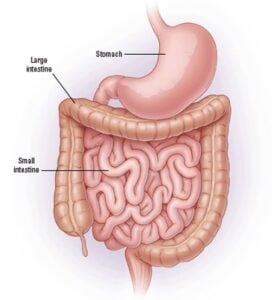
Your small intestine is where most of your food is broken down and where nutrients are absorbed into your blood. It is about 20 feet long! Your large intestine, or colon, absorbs water, forms stool and is home to trillions of gut bacteria that help with digestion, immunity and even mood. When both are working well, you feel the difference in your energy, your skin and your mood.
Why an Intestine Cleanse Helps
Over time, a diet heavy in processed foods, sugar and too little water and fiber can leave the gut sluggish. Things move slowly, waste sits longer than it should, and the good bacteria get crowded out. An intestine cleanse gives your gut a reset. You lighten the load with simple whole foods, add herbs and fiber that help things move, and rebuild your good bacteria with probiotics. Most people notice they feel lighter, have more energy, and digest food more easily when they are done.
Signs Your Gut Needs Support
- Constipation or fewer bowel movements than meals
- Bloating, gas or a heavy feeling after eating
- Skin breakouts, rashes or eczema
- Low energy and brain fog
- Getting sick often
Daily Habits for a Healthy Gut
- Drink enough water. See my post on daily water intake.
- Eat plenty of fiber from vegetables, fruits, seeds and whole grains.
- Take digestive enzymes with cooked meals. See my post on digestive enzymes.
- Add a probiotic to keep your good bacteria strong.
- Move your body every day to keep things moving. Even a short walk after meals helps your digestion.
- Eat a small warm meal in the morning and at night. Your largest meal should be between 10AM and 2PM. Then try and walk, this keeps the digestive fire going.
Intestine Cleanse Safety
Please talk with your doctor before doing a cleanse if you are pregnant or nursing, have IBD (Crohn’s or colitis), or take medications. See a doctor right away for blood in your stool, black stools, severe belly pain, or unexplained weight loss. For more on gut troubles, see my IBS protocol.
*These statements have not been evaluated by the Food and Drug Administration. These products are not intended to diagnose, treat, cure, or prevent any disease.