Margarine vs butter… which one is actually better for you? I get asked this a lot, and honestly it is one of the easiest swaps you can make in your kitchen. Here is the difference between margarine, butter, grass-fed butter and ghee, plus how I made the switch in steps and how easy it is to make your own ghee at home.
Margarine vs Butter: What Is the Difference?
Margarine is made from vegetable oils that are processed to become solid at room temperature. For years that meant partially hydrogenated oils, which are full of trans fats, the worst kind of fat for your heart and cholesterol. The FDA has since banned added trans fats in the US, but most margarine and spreads are still highly processed seed oils mixed with emulsifiers, flavorings and coloring to make them look and taste like butter.
Butter is simple. It is made from cream, and that is about it. Grass-fed butter comes from cows that eat grass instead of grain, and it has more omega-3 fats, CLA, vitamin K2 and beta-carotene (that is why it is so yellow!). Your body knows what to do with real food, which is the whole point of the margarine vs butter question.
Ghee is butter that has been gently simmered so the water evaporates and the milk solids can be strained out. What is left is pure golden butterfat. Because most of the lactose and casein are removed, a lot of people who are sensitive to dairy do better with ghee. It also has a high smoke point, so it is great for cooking at higher heat, and it keeps on the counter for weeks.
Switch in Steps: From Margarine to Grass-Fed Butter
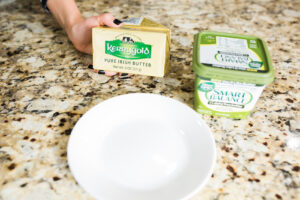 When it comes to margarine vs butter, you do not have to change everything overnight. You can switch out butter in steps if you prefer. If you are used to margarine, (which is the straight bad fat contributing to cholesterol) switch to regular butter. If you can switch out your regular butter for organic grass fed butter, there is a difference in the fat content and in the way your body processes it, and it is better for you. Check out the article for studies and numbers: Why grass fed, organic butter is good for you.
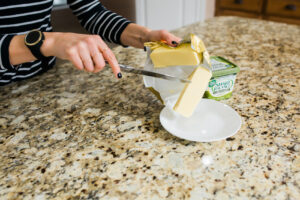 The Kerrygold brand is a great brand, which you can purchase at Costco at a great deal. The silver package is unsalted and the one to use to make your own Ghee. Which is so easy and takes no time at all while making your kitchen smell a m a z i n g. To make it in the instant pot check out this HOW TO. The gold package is salted and the one I regularly use.
How to Make Ghee at Home
- Melt 1 pound of unsalted butter in a heavy pot over low heat.
- Let it gently simmer for about 15 to 20 minutes. It will foam, then the foam will settle and the milk solids will sink to the bottom.
- When the solids on the bottom turn light golden brown and the butter smells nutty, turn off the heat.
- Let it cool a few minutes, then strain it through a cheesecloth or fine mesh strainer into a clean glass jar.
- Store it on the counter for a few weeks or in the fridge for months.
That is it! So in the margarine vs butter debate, real butter and ghee win every time in my kitchen. Ghee is one of my favorite ways to add good fats to our meals. Want to learn more about why healthy fats are so important? Read Fats Are Good! Learning HDL and LDL.
Cutting Out Dairy? Try a Butter Alternative
Really, we should try and cut our dairy intake altogether. See the Cow’s Milk post for more information. There are some great butter alternatives out there if you want to try and cut dairy out. Try out the brand Earth Balance. I like the original or made with olive oil. I have tried both options and they taste great! If you want to try and cut out all dairy, here is a recipe to get started for an alternative for Sour Cream.